Marketplace › Authors
Ordinate 2D ✓
The examples that come with Ordinate 2D: classic problems with their formulas, machines, reference figures and Python experiments, made and checked by the Ordinate 2D team.
135 items
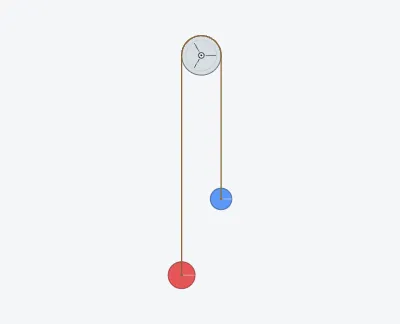 Atwood Machine
Two masses over an ideal pulley. a = (m₁ − m₂)g / (m₁ + m₂).
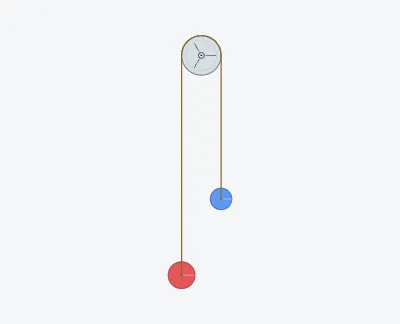 Atwood, Massive Pulley
The pulley grips the rope, so its rotational inertia slows the fall.
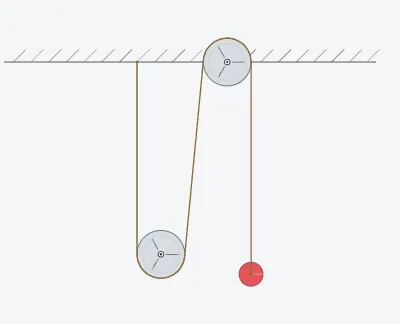 Movable Pulley
A 2:1 tackle. The counterweight moves twice as far as the moving pulley.
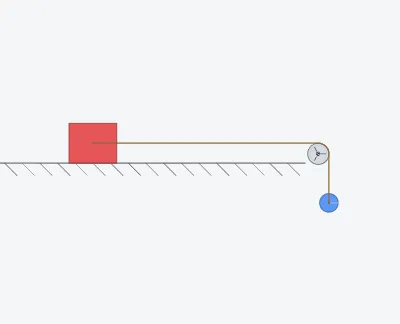 Heavy Chain off a Table
A 1 kg/m chain pulls a block across a smooth table; the hanging part grows, and so does the pull: (m₁ + m₂ + ρL) ÿ = (m₂ + ρy) g.
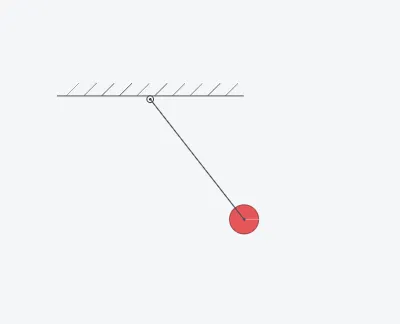 Pendulum
A bob on a rigid rod, released from 38°.
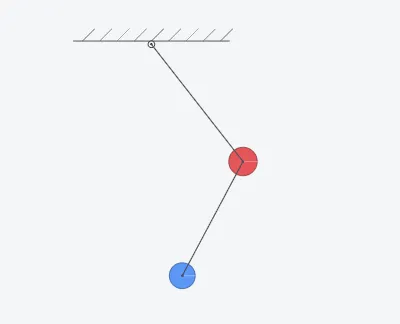 Double Pendulum
Two rods, chaotic for almost any release angle.
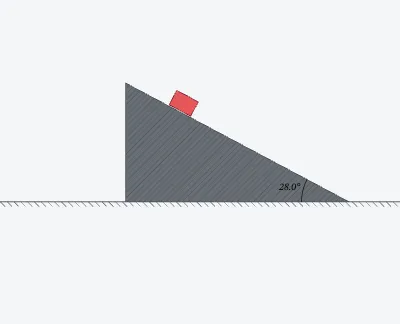 Inclined Plane
28° ramp. Friction is below tan θ, so the block slides.
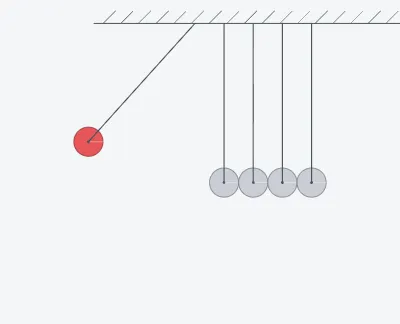 Newton's Cradle
Five balls. Pull the end ball back and let it go.
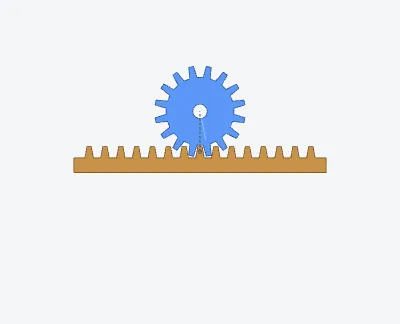 Rack and Pinion
A driven pinion moves a rack in a guide: v = ω r. The rack lets go when it runs out of teeth.
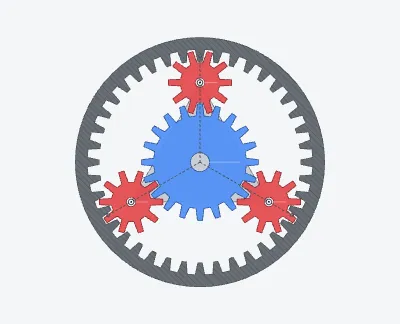 Planetary Gear Set
Driven sun, fixed ring, planets on a carrier: the carrier turns at ω_S · Z_S / (Z_S + Z_R).
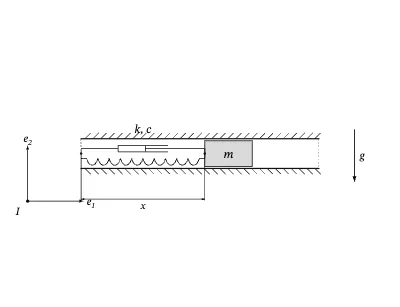 Mass in a Slot
A mass in a slot with hatched channel walls, tied to the slot end by a spring (k, c). Labels, dimension x, frame I.
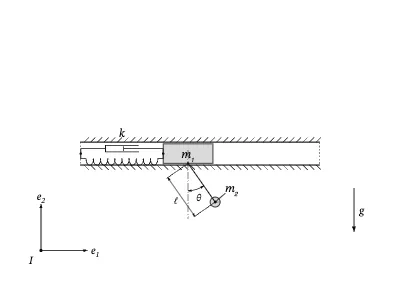 Pendulum on a Trolley
A pendulum hanging from a trolley that runs in a rail and is tied to its end by a spring. Angle arc θ, length ℓ, frame I.
 Disk on a Cart
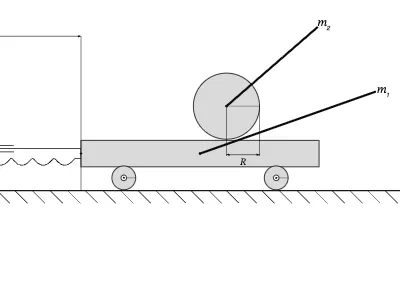
A disk rolling without slipping on a spring-tied cart. Dimensions x and R.
 Rope Wound on a Disk
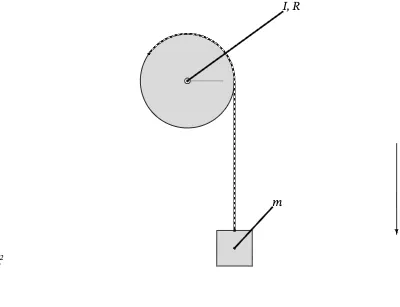
A striped rope wound on a disk, tied at a rim point, carrying a mass.
 Projectile Motion
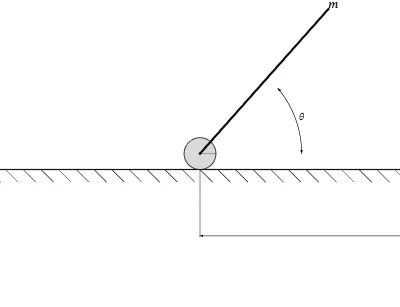
A ball launched at 14 m/s and 40°: x runs at a constant speed, y under g. Range R = v₀² sin 2θ / g and the height against its theory curve.
 Terminal Velocity
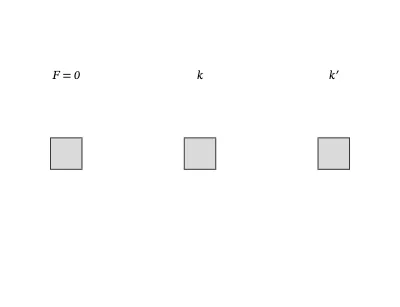
Three 2 kg blocks fall: in a vacuum, as a skydiver (F = −kv²) and with a parachute. v approaches √(mg/k) and the weight is balanced by the drag.
 Four Models of Air Resistance
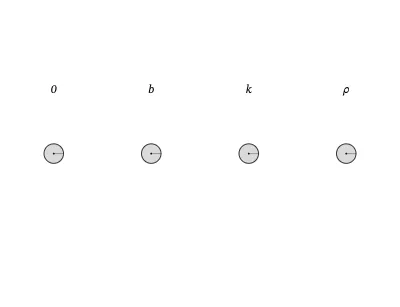
Four balls dropped in air: no drag, F = −bv, F = −kv² and the shape model ½ρC_dAv². Compare their speeds and the energy they lose.
 Sliding to a Stop
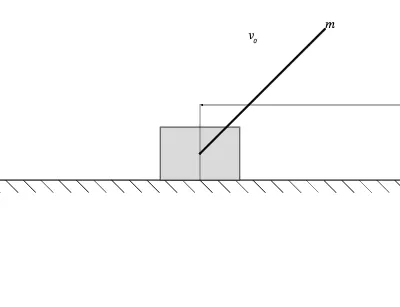
A block slides across a floor with μ = 0.1: the speed falls linearly at μg and it stops after s = v²/(2μg).
 Crate on a Slope Held by a Rope
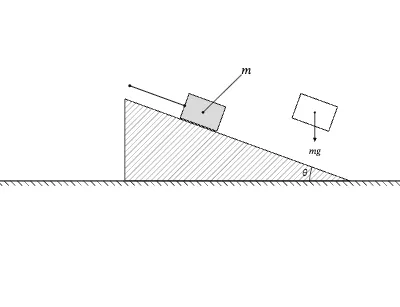
A 50 kg crate on a smooth 20° slope: the rope carries T = mg sin θ = 168 N. Its free-body diagram is drawn.
 Bouncing Ball: Energy
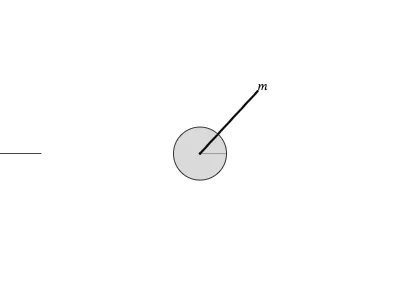
A ball dropped from 5 m: PE becomes KE (v = √(2gh)), and each bounce keeps e² of the energy.
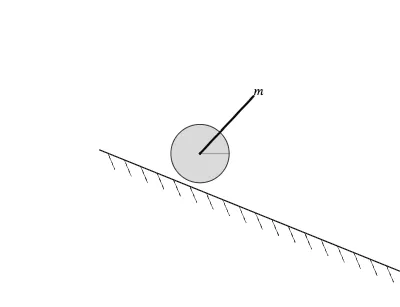 Disc Rolling in a V-Track
A disc rolls down one ramp and up the other: potential energy, kinetic energy of the motion and of the spin, and a constant total.
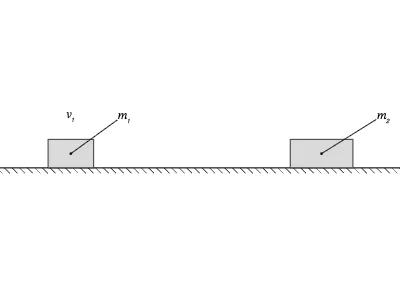 Elastic Collision
1 kg at 3 m/s hits 2 kg at rest: the velocities after are −1 and +2 m/s; momentum and kinetic energy are both conserved.
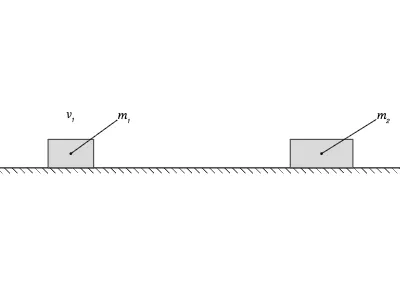 Perfectly Inelastic Collision
The same carts with e = 0: they move on together at 1 m/s. Momentum is conserved, a third of the kinetic energy is lost.
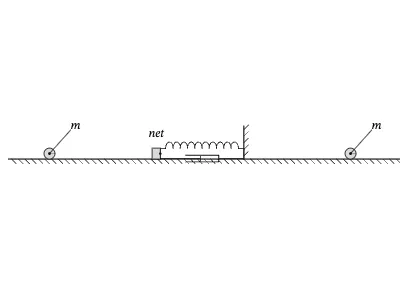 Impulse: Wall or Safety Net
The same change of momentum, Δp = FΔt: the rigid wall stops the ball at once (a huge force), the spring-and-damper net takes much longer.
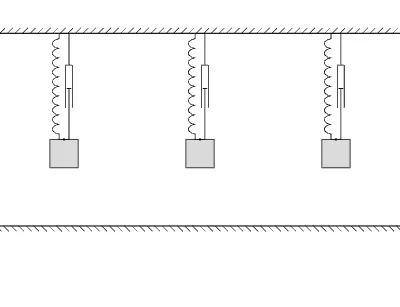 Damped Oscillations
Three masses on springs, released alike: under-damped (ζ = 0.1) rings, critically damped (ζ = 1) returns fastest, over-damped (ζ = 2) creeps.
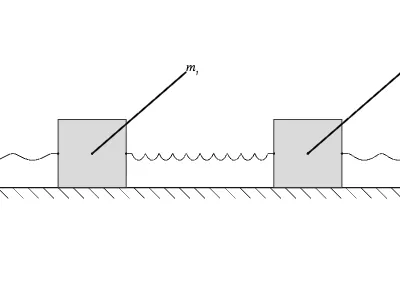 Coupled Oscillators
Two masses and three springs: pull one aside and the energy beats back and forth at the two normal-mode frequencies √(k/m) and √(3k/m).
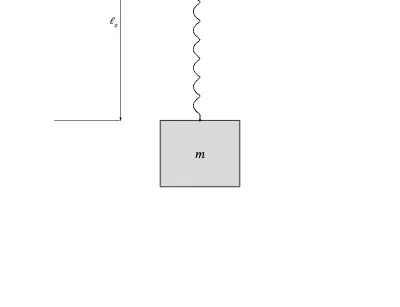 Mass on a Vertical Spring
Released at the natural length, the mass falls 2mg/k: gravitational, elastic and kinetic energy trade places while the total stays constant.
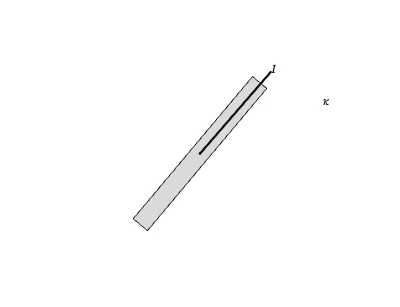 Torsional Pendulum
A bar on a torsional spring (a pin with stiffness κ): T = 2π√(I/κ), whatever the starting angle.
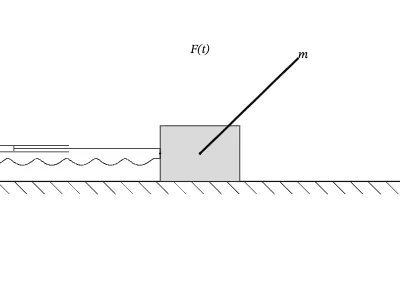 Forced Oscillation near Resonance
A force F₀ sin 2πft drives a damped mass-spring near its resonance (f₀ = 0.95 Hz). Change f or F₀ in Data → Constants and run again.
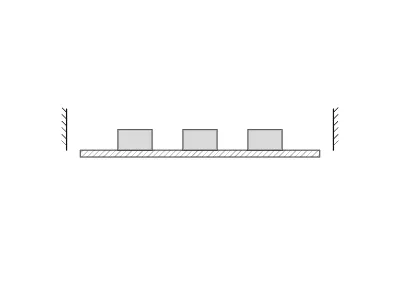 Shake Table
The table moves x = A sin 2πft. A block slips when the table's acceleration A ω² passes μ_s g: the least grippy slips first.
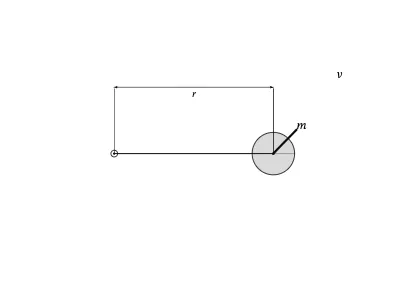 Whirling Mass
A ball on a rod in zero gravity at 3 m/s: the rod's pull is the centripetal force mv²/r and the acceleration is v²/r.
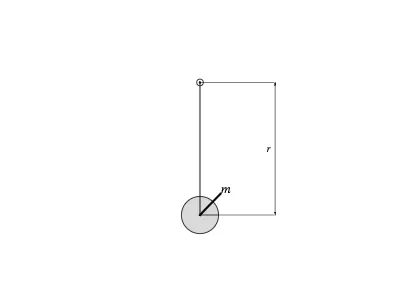 Vertical Circle
A ball swung in a vertical circle: the rod pulls hardest at the bottom (mg + mv²/r) and least at the top, while the energy stays constant.
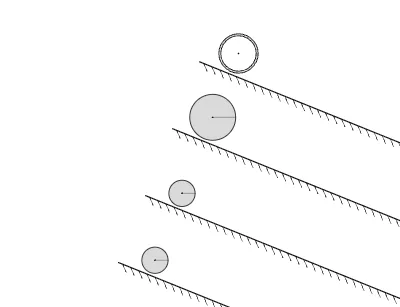 Rolling Race: Slider, Discs and a Hoop
Four ramps: with no friction nothing spins and the slider wins at g sin θ; a disc turns I = ½mr² and runs at g sin θ / 1.5, small or big, light or heavy; a hoop (a ring, I = ½m(R² + r²), nearly mr²) comes last at g sin θ / 1.9.
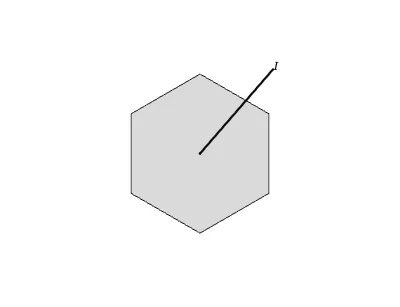 Flywheel with Bearing Friction
A hexagonal flywheel spun at 12 rad/s against a dry-friction bearing: a constant torque slows it linearly, ω = ω₀ − τt/I.
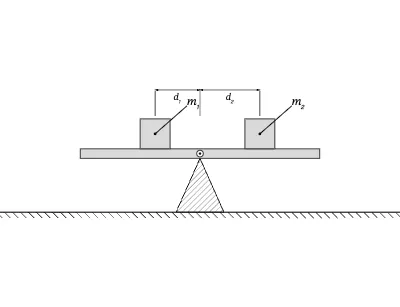 Seesaw: Moments
4 kg at 0.75 m balances 3 kg at 1.0 m: the moments about the pivot cancel. Change a mass or a distance (m₂, d₂) and watch the plank tip.
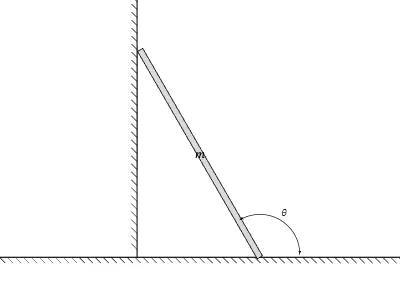 Ladder against a Wall
A ladder on a smooth wall stands only if the floor friction is at least ½cot θ (0.29 at 60°). Set the floor friction to 0.2 and it slips.
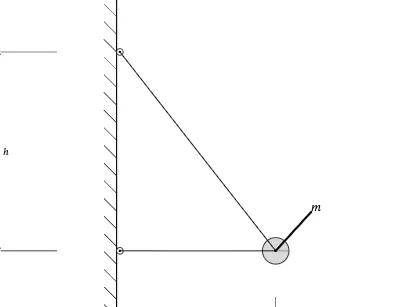 Bracket: Strut and Tie
A strut and a tie hold a 4 kg load: the tie pulls mg√(L²+h²)/h, the strut pushes mgL/h. Analyze → Member Forces lists them.
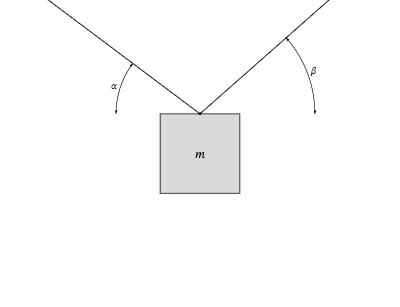 Weight on Two Cables
A 5 kg weight hangs from two cables at different slopes: the sine rule gives both tensions, and the free-body diagram closes.
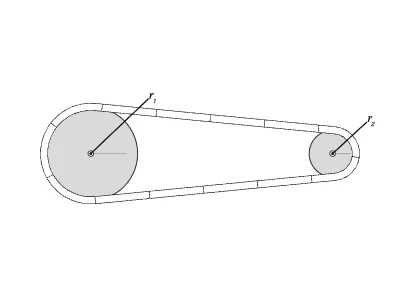 Belt Drive
Two wheels joined by a belt: the rims move at the same speed, so the small wheel turns r₁/r₂ = 2 times faster.
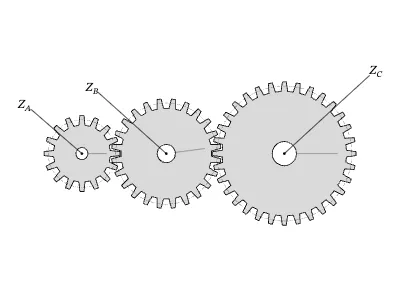 Gear Train with an Idler
16 → 24 → 32 teeth: the idler reverses the direction and drops out of the ratio, ω_C = ω_A·Z_A/Z_C = ω_A / 2.
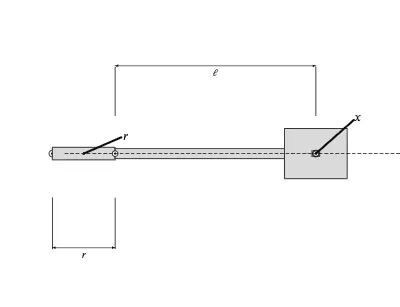 Slider-Crank
A motor turns a crank; a connecting rod drives a piston along its cylinder: x = r cos φ + √(l² − r² sin² φ).
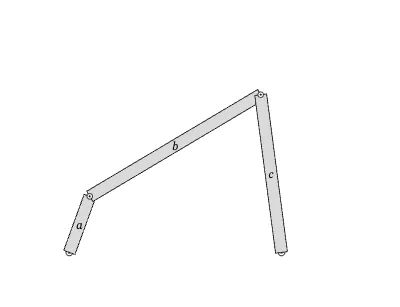 Four-Bar Linkage
A crank-rocker: the crank turns round, the rocker swings to and fro through a fixed arc.
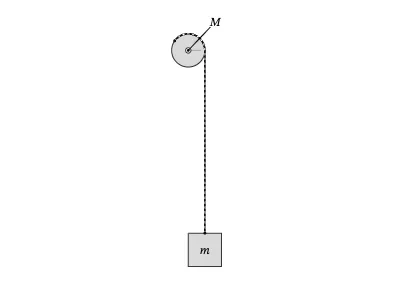 Winch: Work and Power
A motor winds a rope onto a drum: the load rises at ωR, P = F v = mg·ωR, and the potential energy gained is the work done.
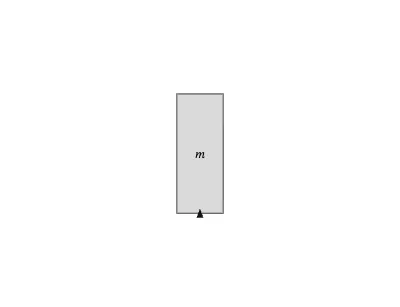 Rocket: Thruster
A 30 N thruster on a 2 kg rocket: a = F/m − g = 5.2 m/s², the height follows ½at².
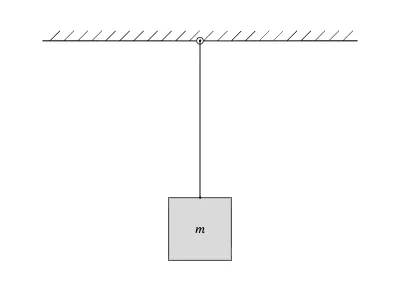 Overload: Break Force
A rod with a 60 N break force holds a 3 kg block while a load grows at 6 N/s: the rod lets go when mg + 6t reaches 60 N.
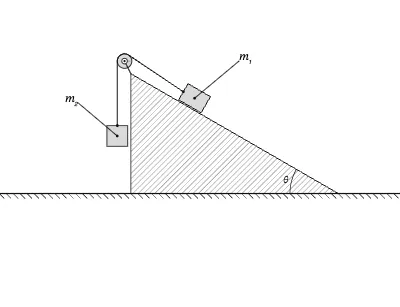 Block on a Slope Tied over a Pulley
2 kg on a 30° slope tied over a pulley to 3 kg: a = (m₂ − m₁ sin θ − μ m₁ cos θ) g / (m₁ + m₂), and T = m₂(g − a).
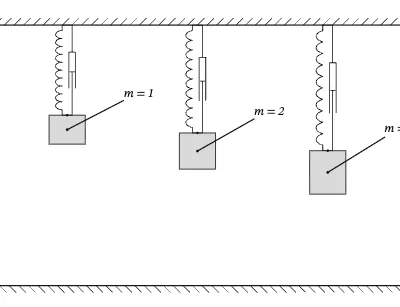 Hooke's Law: Three Masses on Springs
1, 2 and 3 kg hang on identical 40 N/m springs: the extension is mg/k, so twice the mass stretches the spring twice as far.
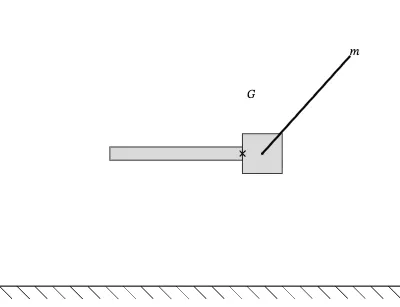 Tossed Hammer: Centre of Mass
A handle welded to a heavy head is tossed with a spin: it tumbles, but its centre of mass follows the parabola of a thrown point mass.
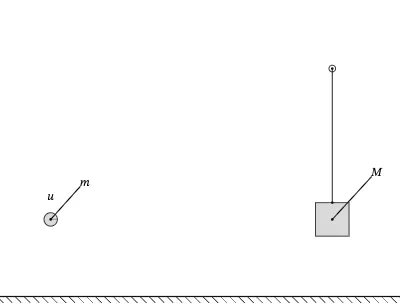 Ballistic Pendulum
A 0.5 kg bullet at 30 m/s embeds in a 4 kg block on a rod: v = mu/(M+m) after the impact, then the swing rises h = v²/2g.
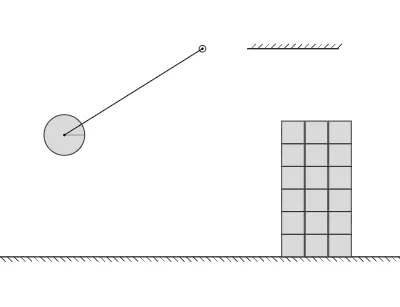 Wrecking Ball
A 20 kg ball on an arm released from 58° swings into a wall of bricks.
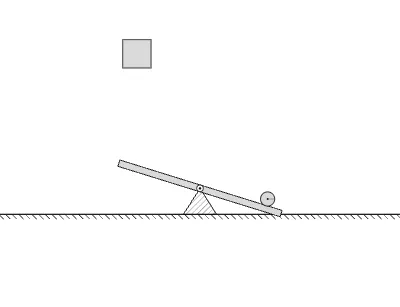 Lever Catapult
A weight dropped on one end of a lever throws the small ball on the other end.
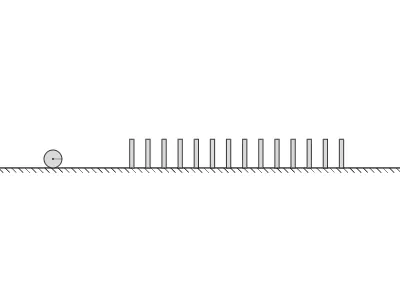 Dominoes
Fourteen dominoes and a rolling ball. A chain of falls: try moving one to change the spacing.
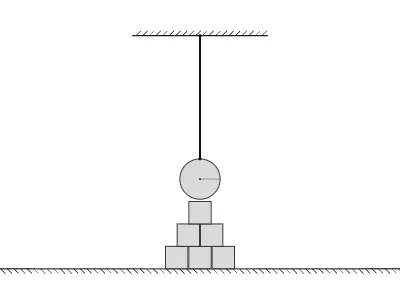 Drop Zone: Cut the Chain
A 25 kg weight hangs on a chain over a pyramid of crates. Pick the Slice tool (Build → Modify) and drag across the chain to cut it.
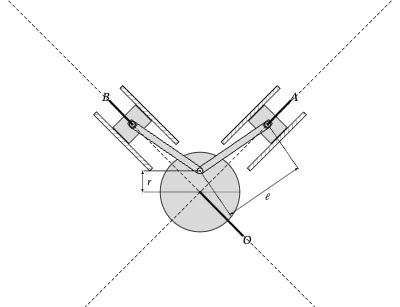 V-Twin Engine
Two pistons 90° apart on one crank pin: each stroke follows s = r cos δ + √(l² − r² sin² δ), and the momentum of the moving parts turns in a nearly steady circle.
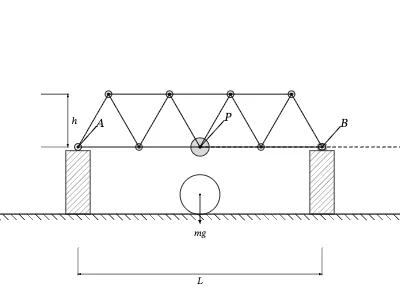 Warren Truss Bridge
Fifteen rods and nine pins carry a 30 kg load: the method of joints gives every member force, which the rods confirm. Analyze → Member Forces lists them.
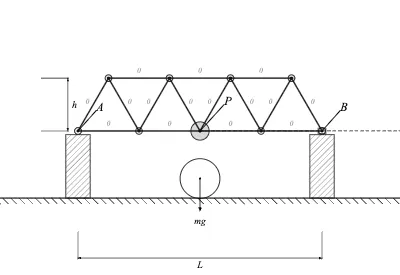 Warren Truss: forces under a changing load
The truss with Analyze → Member Forces switched on, tension red and compression blue, while an extra load rises from 0 to 600 N and back every 6 s: each of the fifteen members follows the method of joints as the load changes, and the truss does not move.
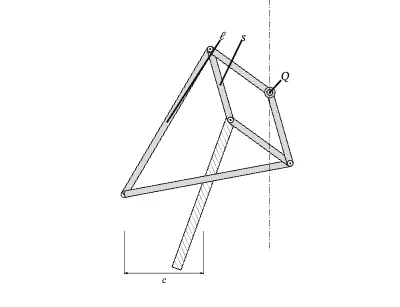 Peaucellier–Lipkin Straight-Line Linkage
Seven bars turn a to-and-fro swing of the crank into a perfectly straight line at the far corner of the rhombus: its distance from the pivot is inverted, |OP||OQ| = ℓ² − s².
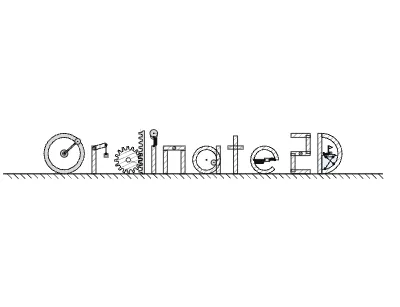 Ordinate 2D: the logo as a machine
The name spelled with machine parts: the O is a ring wheel on a motor, the d a pinion lifting a rack, the dot of the i bobs on a spring, the r's arm lifts a pail on a rope, a ball rolls high up the sides of the a's bowl, the crossbar of the e is a block between two springs, the n and the 2 rock, the t's crossbar slides, and a boat rocks on the water in the D as a weight slides on its deck. Everything repeats every 12 s.
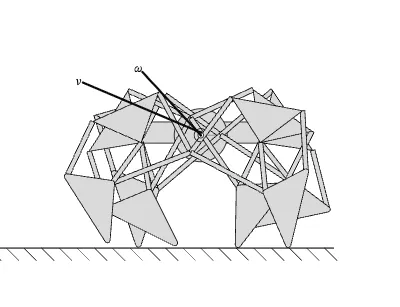 Walking Machine
Six legs of Jansen's type, with lengths designed for this studio, on one crank: each foot runs along a straight 0.49 m stride for almost half a turn, so the machine walks about a metre per crank turn without bobbing.
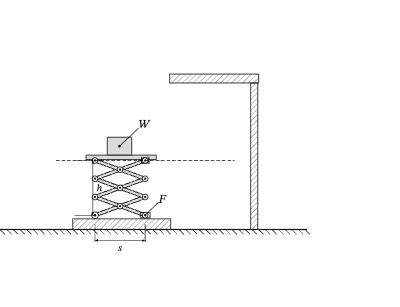 Scissor Lift
Three stages of crossed bars lift a 40 kg crate as a driven roller closes the feet: the platform stands n √(L² − s²) high, and the roller's push, g (n M + n² m) cot θ by virtual work, is largest when the lift is low.
 Ferris Wheel
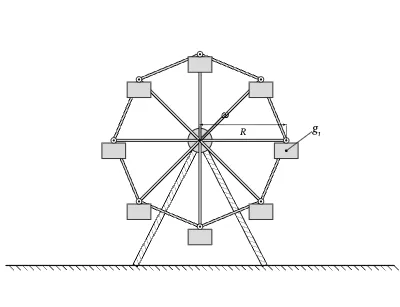
A motor turns a wheel; eight gondolas on free pins swing like pendulums and stay close to upright all the way round.
 The Monkey and the Hunter
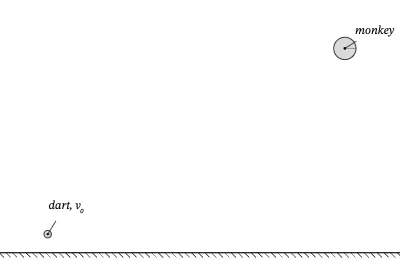
A dart is aimed straight at a monkey that lets go at the instant of the shot. Both fall by ½gt², so the dart hits whatever its speed: the distance between them shrinks at exactly v₀.
 The Chase: Car and Truck
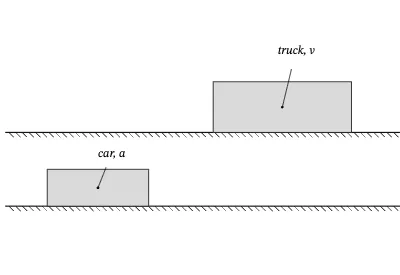
A truck passes at 6 m/s; a car 4 m behind starts from rest at 2 m/s². They meet when ½at² − vt − gap = 0, and the gap is widest when the speeds are equal.
 Billiards: an Oblique Collision
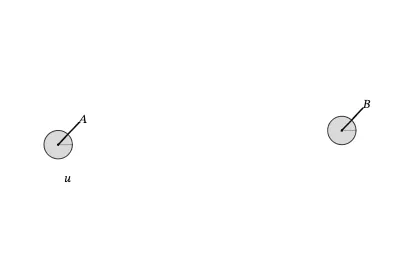
A ball strikes an equal ball at rest off the centre line: the struck ball leaves along the line of centres, the other turns aside, and they part at exactly 90°.
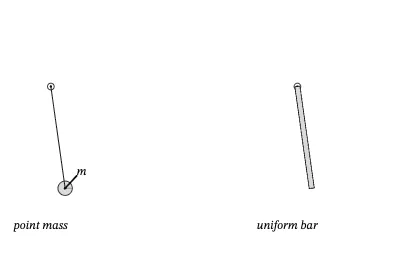 Rod and Point Mass: the Parallel-Axis Theorem
A pinned bar and a bob of the same mass and length, released from 8°: the bar's mass is spread out, I = mL²/3, so its period is √(2/3) times the bob's.
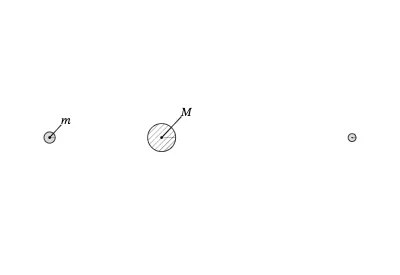 Orbits: a Planet and a Comet
A fixed sun, a planet on a circular orbit and a comet that starts too slowly and falls in on an ellipse: r v and ½v² − GM/r stay constant for each.
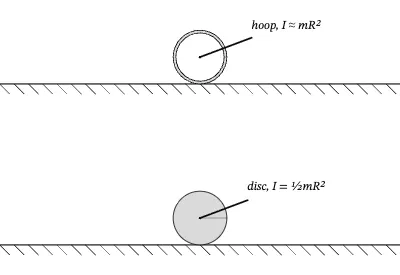 Slipping, then Rolling
A disc and a hoop are thrown along the floor without spinning: both slide at first, friction slows the centre and spins the body up until v = ωR, then both roll steadily at v₀/(1 + k): ⅔ v₀ for the disc, a little over half for the hoop.
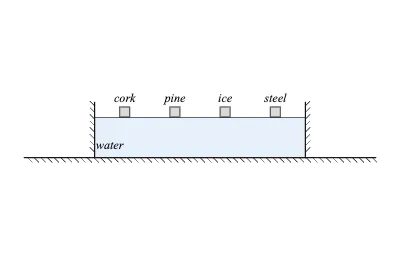 Archimedes: What Floats, and How Deep
Cubes of cork, pine, ice and steel in a tank of water. A floating cube sinks until the water it pushes away weighs as much as it does: d = s ρ/ρ_water. Steel sinks.
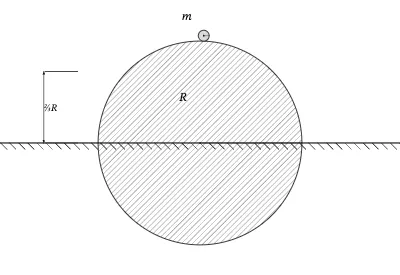 Leaving the Dome
A block slides off the top of a smooth dome. The normal force m g cos θ − m v²/R falls to zero at cos θ = ⅔: it always leaves at two thirds of the height.
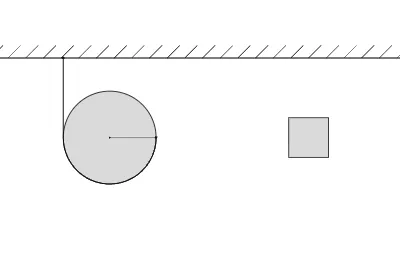 The Yo-Yo
A disc falls as its string unwinds: a = g/(1 + I/mR²) = ⅔ g, and the string holds a third of its weight, until the string runs out. A box beside it falls at g.
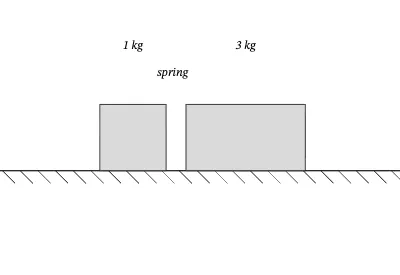 Recoil: Two Carts Pushed Apart
A spring pushes a 1 kg and a 3 kg cart apart. The total momentum stays zero: the light cart leaves three times as fast and takes three quarters of the energy.
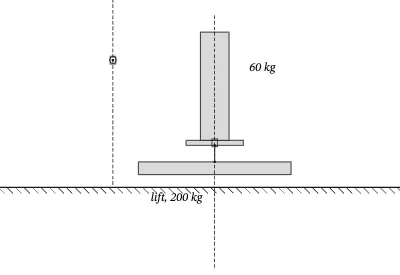 Apparent Weight in a Lift
A passenger on a scale in a lift that goes up and down: the scale reads N = m(g + a), more while the lift speeds up going up (or brakes going down), less the other way round.
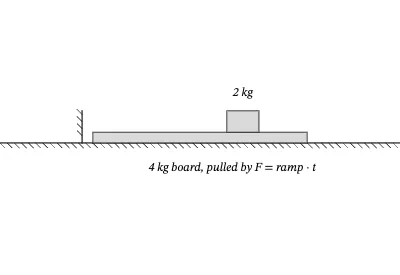 A Block on a Board: When Does It Slip?
A board on ice is pulled harder and harder. Friction carries the block on it along until F = μ g (m₁ + m₂); then the block slips and the accelerations part.
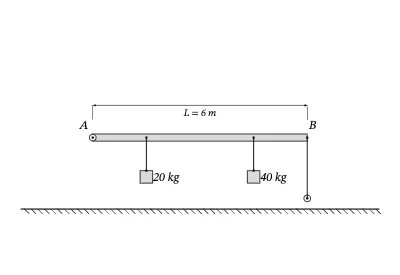 A Simply Supported Beam
A beam on a pin and a strut carries two weights. Moments about the pin give the strut's push, R_B L = Σ W x; the vertical balance gives the pin's.
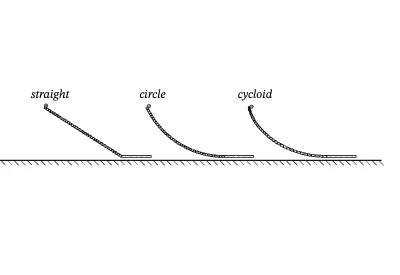 The Fastest Slope: Brachistochrone
A straight track, a circular arc and a cycloid from the same start to the same end. The straight one is shortest; the cycloid is fastest: 1.00 s against 1.19 s.
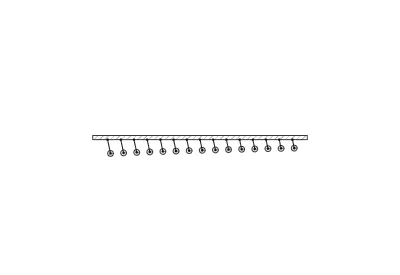 Pendulum Wave
Fifteen pendulums of slightly different lengths drift out of step into waves, two groups, three, and line up again after exactly 60 s.
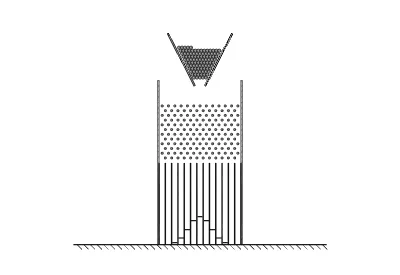 Galton Board
100 balls drift down through twelve rows of pegs: each peg is a coin toss, and the bins fill into the binomial bell curve (the green marks show the expected heights).
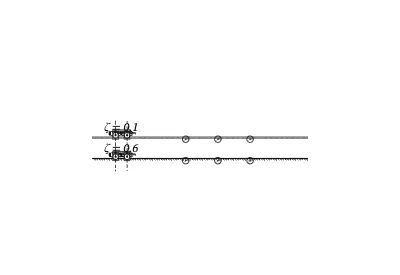 Cars over Bumps: Suspension
Two cars on springs drive over the same bumps. Weak dampers (ζ = 0.1) keep bouncing; ζ = 0.6 settles after one swing.
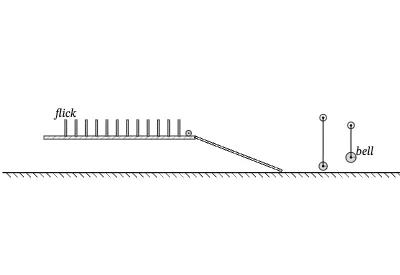 Chain Reaction
Dominoes knock a ball down a ramp, the ball swings a hammer, the hammer rings a bell. The graph follows the energy from stage to stage.
Script
Experiment: launch angles and range
Launch a ball at five angles, one after the other; the table has the range against R = v₀² sin 2θ / g.
Script
One ball falling on every world
The same 10 m drop on the Moon, Mars, Earth, Jupiter and the Sun, timed against t = √(2h/g).
Script
Measure friction by tilting
Tilt a platform slowly: the block slips when tan θ = μ.
Script
Bungee jump by energy
A cord that is slack, then a spring: the script's force gives the lowest point the energy method predicts.
Script
Elastic collisions for every mass ratio
A moving ball hits balls of 0.25 to 8 times its mass; the speeds after against the formulas.
Script
The rocket equation
A rocket that burns fuel gets lighter: Δv = v_e ln(m₀/m) − gt, mass and thrust set from the script.
Script
Pendulum period against amplitude
Release a pendulum from 5° to 150°: the period against 2π√(L/g) and the exact value.
Script
Resonance curve of a driven oscillator
Step the driving frequency up and measure the amplitude: the resonance curve against theory.
Script
A pulse along a chain of springs
Strike one end of a chain of 30 masses: the pulse travels at a√(k/m).
Script
Chaos: two nearly identical double pendulums
A difference of 10⁻⁴ rad grows until the two motions are unrelated.
Script
Orbits and Kepler's third law
Gravitation between bodies (s.G, body.gravitates): circular planets give T²/r³ constant, a slow comet gives an ellipse and conserves r·v.
Script
A gas in a box: pressure from collisions
Forty atoms bounce in a closed box; the wall's pressure against N⟨KE⟩/A.
Script
PID: balance a pole on a cart
An inverted pendulum on a cart held up by a PID controller written in the script.
Script
Trebuchet: where the energy goes, where the ball lands
A 60 kg counterweight swings a beam; the script opens the sling's pouch when the ball flies 40° up: the ball's share of the counterweight's energy, and its landing point against the projectile formula.
Script
Measure g with pendulums (a least-squares fit)
Six pendulums from 0.25 to 2 m are timed; a straight-line fit of T² against L gives g = 4π²/slope.
Script
The best kick with air drag (a golden-section search)
A football kicked at 25 m/s in air: the script searches for the angle of the longest kick, which is not 45°.
Script
Energy audit of the open scene
Open any scene, then run it: kinetic and potential energy of every moving body, their sum, and how much was lost.
Script
PD control: move a cart to a target
F = kp·(target − x) − kd·v moves a cart to four targets; the console gives each move's overshoot and settling time.
Script
Moment of inertia from rolling times
A disc, a thick ring, a thin hoop and a sliding block race down equal slopes; k = g sin θ t²/2L − 1 gives each one's I/mr².
Script
How fast do dominoes fall? A sweep of the spacing
Six rows of dominoes with different spacings fall at once: the speed of the falling front against d/h, and the fastest spacing.
Script
Build a scene in a loop: a pyramid of boxes
A pyramid made by loops, then a heavy ball thrown at it.
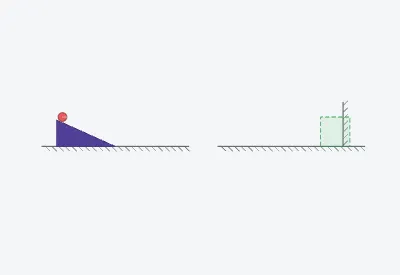 Bridge the gap
The ball rolls off the ramp towards a gap 1 m wide. Get it across to the green zone, with at most two parts.
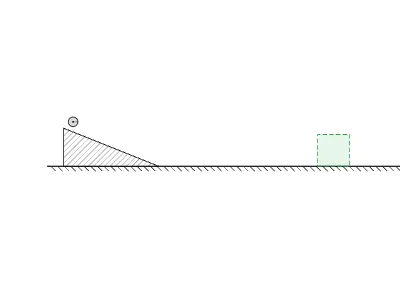 Stop the ball
A ball rolls down a slope and on along the floor. Make it stop inside the green zone and stay there for a second, with one part.
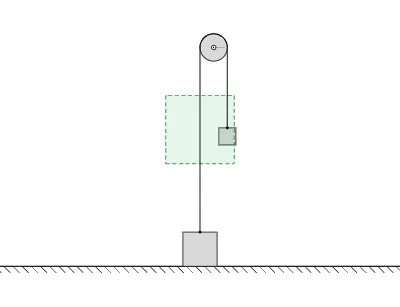 Lift the crate
A 5 kg crate hangs by a cable over a pulley from a light hook. Raise the crate into the green zone, with at most two parts.
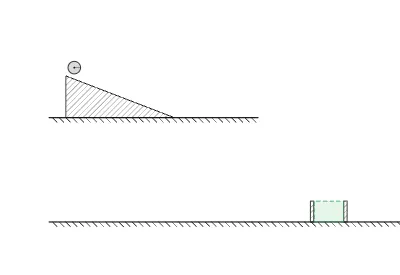 Hole in one
The ball runs down a slope and flies off a high table, right over the cup. Make it land in the cup, with one part.
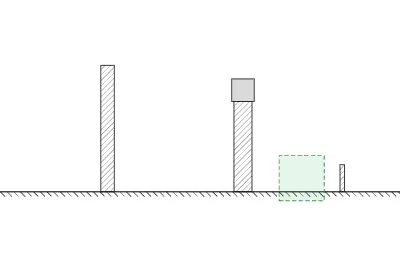 Over the wall
A crate stands on a pillar behind a high wall. Knock it off into the pit with one shot of the slingshot.
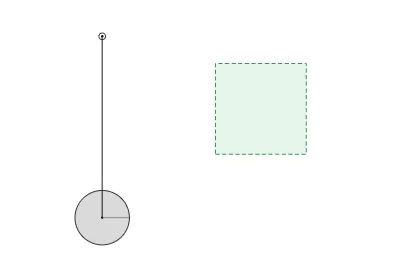 Ring the bell
A heavy bell hangs on a rope. Swing it up into the green zone with one shot: it needs the right speed, not just a hit.
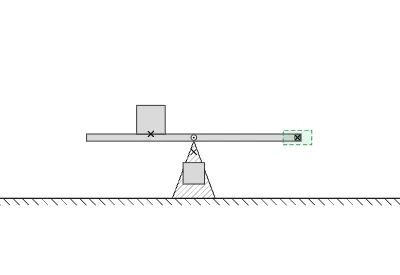 Balance the seesaw
A 6 kg block is fixed 0.6 m left of the pivot of a balance. Add one box so the plank stays level for three seconds: m₁ d₁ = m₂ d₂ (set its mass in Properties).
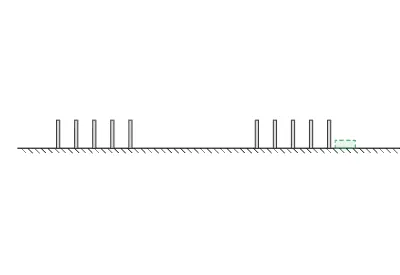 Dominoes: fill the gap
The first domino is flicked, but the row has a gap. Fill it so the last domino falls into the green zone, with at most six boxes.
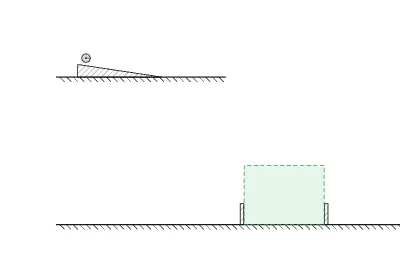 Egg drop
An egg rolls off a shelf 3.5 m up and falls into a basket. Catch it without breaking it: it breaks if its speed changes by more than 3 m/s in one hit. At most three parts.
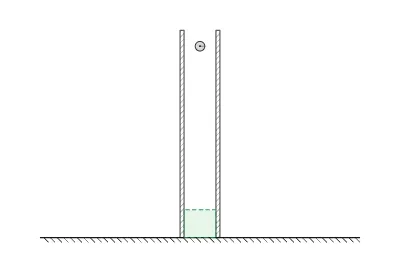 Slow marble
A marble of 1300 kg/m³ drops down a tube in about a second. Make it take six seconds or more, but still reach the bottom (within 25 s), with one part: a liquid. Set its density in Properties.
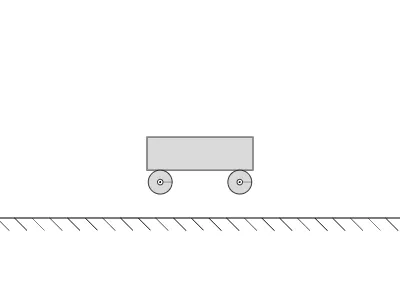 Cart on two wheels
A 3 kg cart 0.8 m long on two 0.2 kg wheels, each on a pin axle: put a load on it, pull it with a cable, give it a motor.
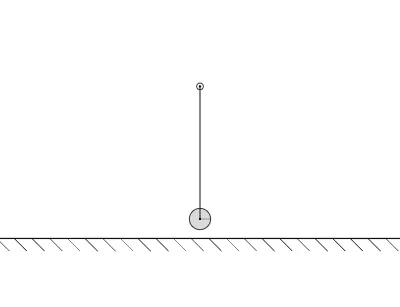 Simple pendulum, 1 m
A 1 kg bob on a rigid rod 1 m long from a pin support: its period is 2π√(L/g) = 2.01 s for small swings.
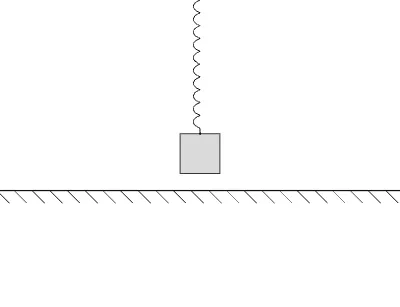 Mass on a spring
A 1 kg block hanging from a ceiling on a 40 N/m spring: it bobs with the period 2π√(m/k) = 0.99 s.
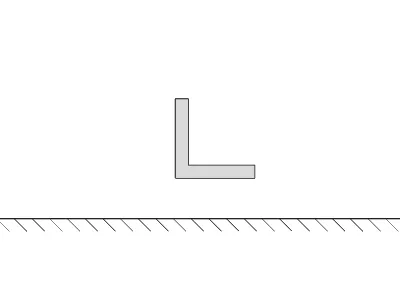 L-bracket
A steel angle bracket 0.6 × 0.6 m, 0.1 m thick, 3 kg: one rigid body with an outline of its own. Weld or pin things to it.
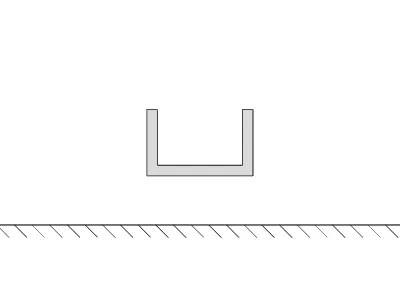 Cup (U channel)
A U-shaped cup 0.8 m wide and 0.5 m deep with 0.08 m walls, 4 kg: balls dropped in stay in it, and it can be carried or tipped.
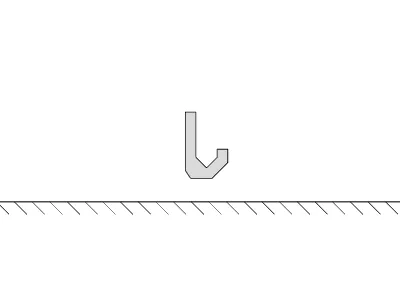 Hook
A crane hook 0.5 m tall, 2 kg: hang it from a rope by its eye and catch a ring or a bar with it.
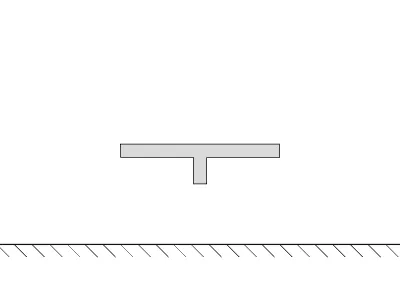 T-beam
A T-section beam 1.2 m long: a 0.4 m flange on a 0.1 m web, 6 kg. Rest it on two supports, or build a frame with it.
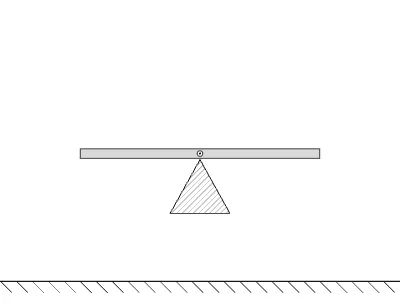 Seesaw
A 2 m plank of 3 kg pinned on a wedge-shaped fulcrum: a lever. Put masses on it to balance it (m₁ d₁ = m₂ d₂).
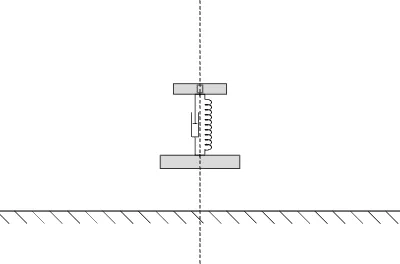 Spring launcher
A plunger on a stiff spring (800 N/m) in a vertical guide on a base plate. Drop a ball on it, or pull the plunger down and let go: it throws what sits on it.
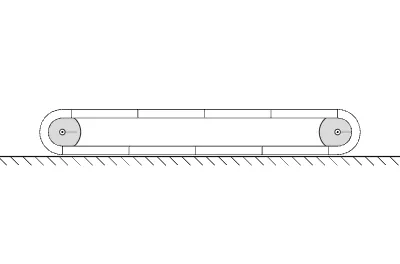 Conveyor belt
Two drums 3 m apart joined by a belt, the left one driven by a motor at 2 rad/s (0.4 m/s at the belt). Boxes put on top are carried along.
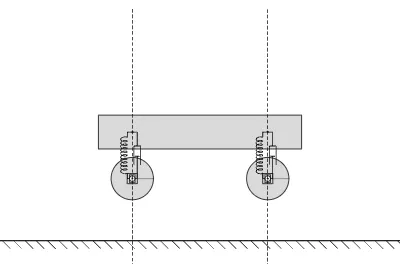 Car with suspension
A 120 kg body on two 10 kg wheels, each on a spring (3500 N/m) and a damper (ζ ≈ 0.4) in a vertical guide: drive it over bumps, change the damping and compare.
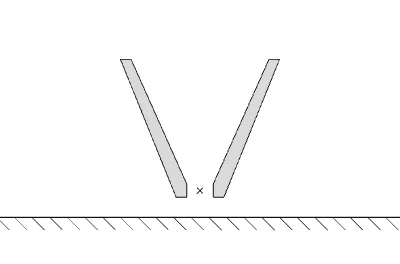 Funnel
A V-shaped funnel 1.2 m across with an outlet 0.2 m wide, 5 kg (two walls welded together): it gathers balls and lets them out one by one. Pin or weld it in place.
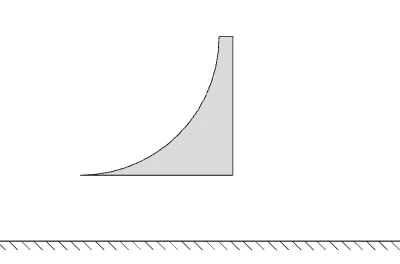 Quarter-pipe ramp
A curved ramp 1.5 m high, a quarter circle, 30 kg: a ball rolling into it runs up the curve and comes back, or flies off the top if it is fast enough (v² > 2gh, or 10/7 gh rolling).
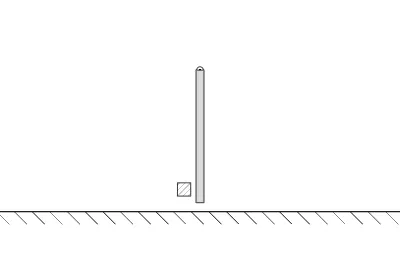 Hinged flap with a stop
A flap hanging from a pin, with a stop on one side: it swings open one way and not the other, a one-way gate for balls and carts.
Material
Aluminium
μs 0.61, μk 0.47 against steel (Serway & Jewett, Table 5.1); restitution 0.5, typical. It keeps a body's own mass.
Material
Glass
μs 0.94, μk 0.40 glass on glass (Serway & Jewett, Table 5.1); restitution 0.7, typical. It keeps a body's own mass.
Material
PTFE (Teflon)
μs 0.04, μk 0.04 Teflon on Teflon (Serway & Jewett, Table 5.1); restitution 0.4, typical. It keeps a body's own mass.
Material
Oiled metal
μs 0.15, μk 0.06 metal on metal, lubricated (Serway & Jewett, Table 5.1); restitution 0.5, typical. It keeps a body's own mass.
Material
Cartilage (synovial joint)
μs 0.01, μk 0.003 in a human joint (Serway & Jewett, Table 5.1); restitution 0.1, typical. It keeps a body's own mass.
Material
Concrete
μs 1.0, μk 0.8 for rubber on concrete; 0.6/0.5 concrete on concrete; density 2400 kg/m³ (rubber on concrete: Serway & Jewett, Table 5.1; the rest typical values); restitution 0.2, typical. It keeps a body's own mass.
Material
Cork
μs 0.5, μk 0.4, springy; density 240 kg/m³: it floats with a quarter under water (typical values); restitution 0.6, typical. It keeps a body's own mass.
Material
Lead
hardly bounces (e ≈ 0.05), grips; density 11 340 kg/m³ (typical values); restitution 0.05, typical. It keeps a body's own mass.
Material
Silicone superball
bounces back to about 80 % of its drop height (e ≈ 0.9); density 1100 kg/m³ (typical values); restitution 0.9, typical. It keeps a body's own mass.
Material
Sandpaper
the grippiest surface here: μs 1.1, μk 0.9 (blocks stay put on a 45° slope) (typical values); restitution 0.1, typical. It keeps a body's own mass.
Material
Felt
soft: no bounce at all (e ≈ 0.02) and a high rolling resistance; μs 0.4, μk 0.3 (typical values); restitution 0.02, typical. It keeps a body's own mass.